
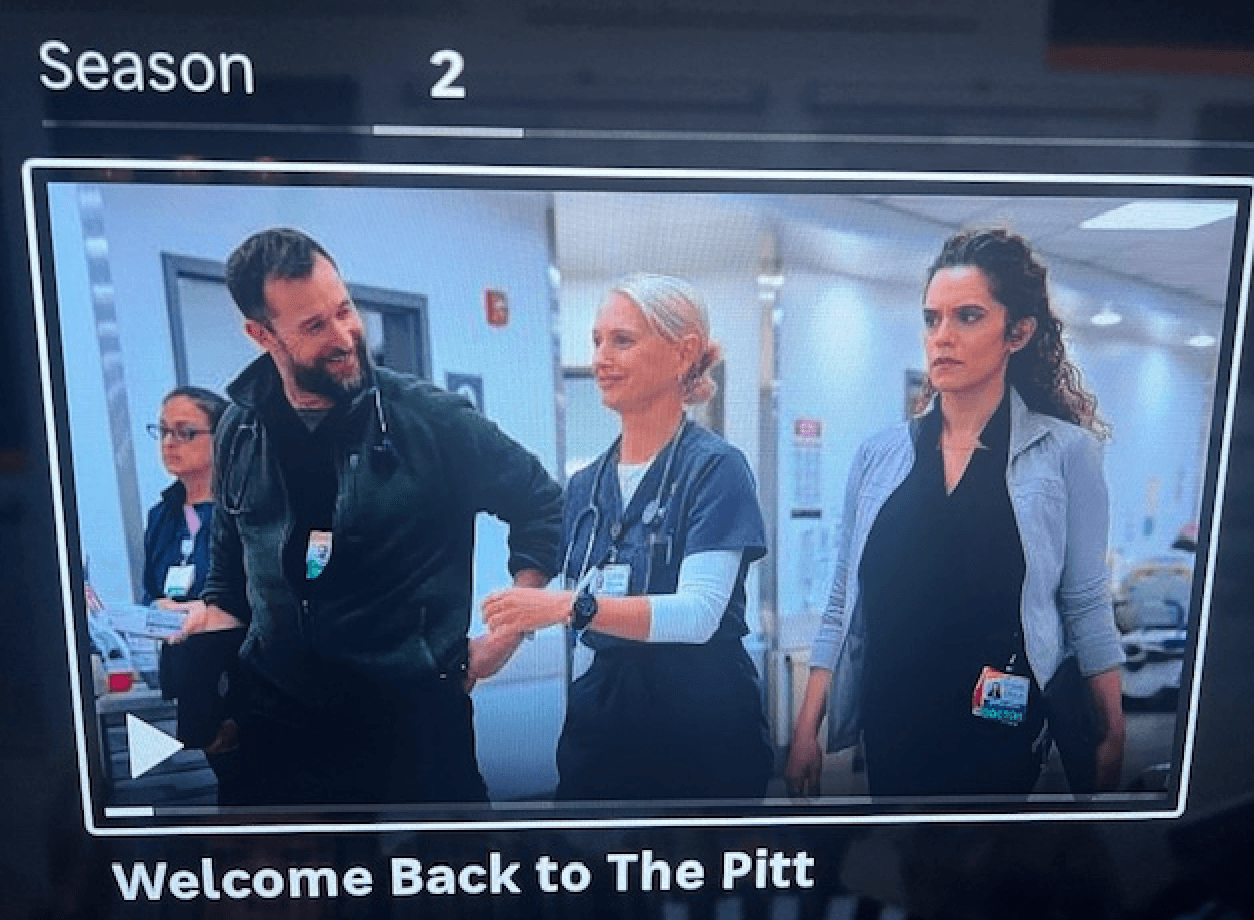
Have you seen the award winning medical TV series The Pitt?
Please do yourself a favour and watch it tonight.
It’s wonderful, engaging, raw television now in its second season.
One of the reasons the new medical drama The Pitt feels so gripping is not just the intensity of the cases, but the way the doctor’s thinking constantly shifts under pressure.
Each episode unfolds in near real time, following emergency department staff across a single, relentless 15-hour shift.
There is no pause button.
No time to retreat and reflect.
Decisions must be made in the moment—often with incomplete information, rising emotions, and lives on the line.
In other words, The Pitt is a masterclass in Switch Thinking.
Moments That Matter—One After Another
Emergency medicine is built on moments that matter.
A patient crashes.
A family demands answers.
A colleague makes a mistake.
An unexpected complication arises.
In The Pitt, these moments arrive every few minutes, sometimes seconds apart.
What’s striking is that the characters aren’t just reacting—they are continually switching how they think to match the moment in front of them.
One minute requires calm, structured, protocol-driven thinking.
The next demands intuition, empathy, creativity or rapid reframing.
The drama doesn’t come from chaos alone—it comes from the need to switch modes fast.
This individual and group agility is why it reminds me so much of Switch Thinking.
In Switch Thinking you you switch from Box Mode (i.e. structured, linear, logical) to Ball Mode (i.e. playful, fun, imaginative, emotional) depending on the need, situation or moment.
And switch back again.
The switch need only be for 2 minutes but it can make a big difference in important moments.
Box Mode: Structure Saves Lives
Much of emergency medicine runs on what I call Box Mode Thinking (this roughly equates to your brain’s Central Executive Network):
- Protocols
- Checklists
- Triage systems
- Clear roles and chains of command
In The Pitt, Box Mode is visible whenever the team stabilises a patient, follows trauma procedures, or coordinates under pressure.
These scenes are precise, almost choreographed.
Everyone knows what to do.
Structure reduces cognitive load and prevents mistakes when stakes are high.
Box Mode is not boring—it’s protective.
It creates safety when time and attention are scarce.
Ball Mode: When the Rules Aren’t Enough (this roughly equates to your Default Mode Network)
But medicine—and life—rarely stays neatly inside the box.
The Pitt shines when situations break the script:
- A patient doesn’t present “by the book”
- Resources are unavailable
- Emotions run high
- Ethical dilemmas surface
In these moments, the characters must switch into Ball Mode—a more open, adaptive, creative way of thinking.
They improvise.
They draw on experience, intuition, and empathy.
They see the situation from a different angle or reframe what really matters right now.
This is often where the most human moments occur: calming a terrified patient, navigating a family conflict, or finding an unconventional solution when the obvious options are gone.
The Switch Is the Skill
What makes The Pitt compelling is not Box Mode or Ball Mode alone—it’s the switch between them.
A doctor may begin a scene in Box Mode, running through clinical steps, then instantly switch when an unexpected question or emotional reaction arises.
After addressing it, they often switch back to structure to move forward.
This is the core insight: performance in moments that matter isn’t about staying in one mode—it’s about matching the mode to the moment.
The best characters aren’t the smartest or the most experienced.
They’re the ones who can switch quickly, deliberately and appropriately.
Why Switch Thinking Resonates Beyond the ER
That’s why The Pitt resonates far beyond medicine to the workplace, home or cafe.
Most of us don’t work in trauma units, but we experience our own versions of moments that matter every day:
- An unexpected question in a meeting
- A difficult conversation at home
- A high-stakes presentation
- A conflict that escalates faster than expected
Like the doctors in The Pitt, we often default to one way of thinking—too rigid, or too reactive—and miss the moment.
The difference between coping and excelling is often just a small mental switch, made quickly.
2 Minutes Can Change Everything
One of the most powerful ideas illustrated by the show is that you don’t need hours to change your thinking.
In real life, just as in The Pitt, there is rarely time for deep reflection.
What you often have is a brief window—sometimes no more than a minute or two—to reset, reframe, or shift gears.
The goal isn’t to control the outcome—you can’t.
Even the best doctors can’t save everyone.
The goal is to be at your best in the moment, given what you can control: your focus, your mode, and your response.
Think beyond The Pitt
The Pitt isn’t just a medical drama.
It’s a metaphor for modern work and modern life—fast, unpredictable, emotionally charged, and unforgiving of slow thinking.
Those who thrive aren’t the ones who never feel pressure.
They’re the ones who can notice the moment, switch how they think, and act with clarity—again and again.
That’s Switch Thinking in action.
And The Pitt shows us exactly why it matters and how to do it.