
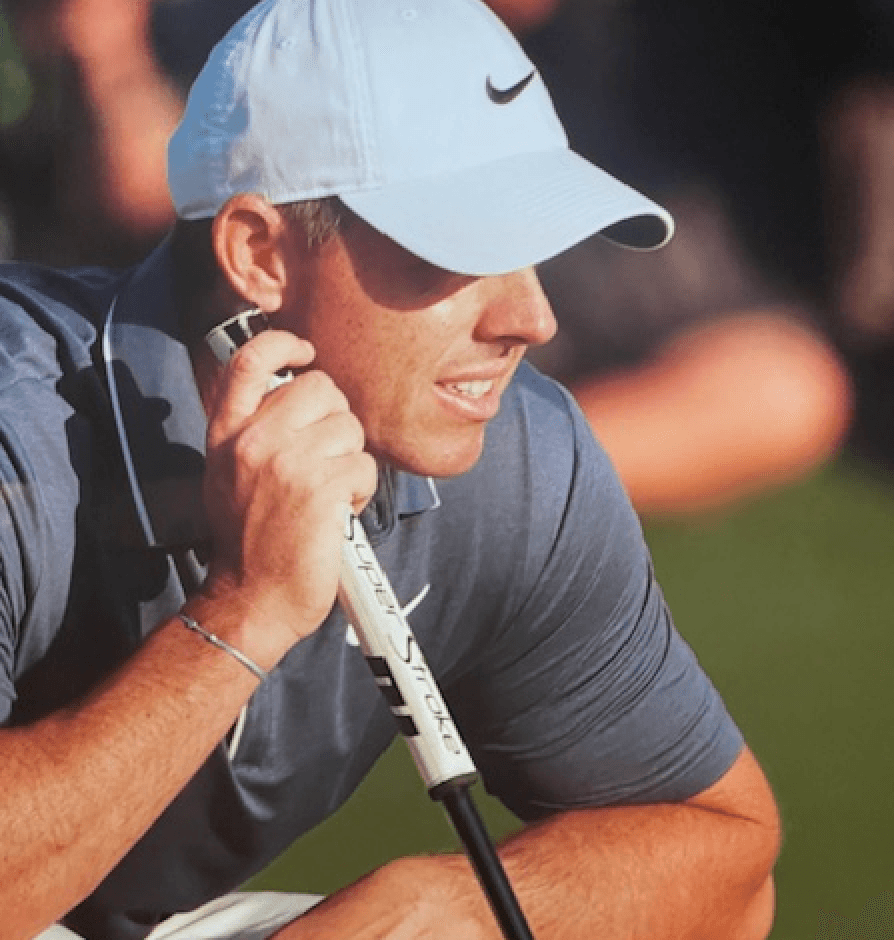
When Rory Mcilroy, was the 2025 Masters it was the culmination of a 14 year journey.
But even his triumph was not without its drama.
He bogeyed the last hole and was in a playoff.
Rory was feeling down and his mind was filled with what if’s.
But then his caddy said to him:
‘Pal we would’ve taken this position on Monday morning.’
As Rory later recounted, ‘it just snapped me into such a good frame of mind, and I was like yeah we would’ve taken this position Monday morning.
Absolutely.
We got on the golf cart and it was like the first bit of peace that I had all day.
It was like this quiet, serene you know long shadows, hear the birds chirping.it was like this is really nice.
It just got me thinking so positively about the moment.
You know I had a second chance.’
The morale of the story?
A small change in thinking led to an instant impact.
Rather than dwell on the past, a timely intervention at just the right moment meant that Rory could focus on playing with optimism and peace.
It changed how he felt and what he did (he won the tournament).
This ability to switch your thinking – on demand is a learned skill.
All you need is to switch.
We often think that meaningful change takes time.
New long term habits, routines or systems.
These are valuable.
But what about the moment you’re in right now?
The conversation that goes sour.
The decision that needs to be made quickly.
Perhaps an unexpected question in a presentation or interview.
Because in those moments, you don’t have weeks or months to change.
You have seconds.
And this is where a different kind of change becomes powerful:
Small switches – Instant impact.
The Hidden Gap in Personal Development
Most personal development focuses on long-term change.
But time is short, the world is changing.
Attention spans are declining.
Information arrives in in real time.
You need a new idea in a hurry.
Or a client wants a problem solved – right now.
In these moments, the question is not:
“What habit should I build?”
It’s:
“How can I shift right now?”
The Power of a Small Switch
A small switch is exactly that:
A subtle shift in how you think, see, feel, or respond.
Not a complete overhaul.
Not a major transformation.
Just a small change.
But here’s the key:
The impact is instant.
For example, instead of thinking:
“I hope this doesn’t go wrong…”
Switch:
“What’s one thing I can make work?”
Instead of:
“They’re being difficult.”
Switch:
“They might be dealing with something.”
Instead of, “I’m not ready.”
Switch:
“I’m learning as I go.”
Each of these takes seconds.
The other key benefit of a small switch is that it only takes 2 minutes and you can always switch back.
But each switch can potentially change:
- your mindset
- your emotional state
- your behaviour
- and often, the outcome
Why Small Switches Work
Small switches work because they operate at the level of perception
And perception shapes everything.
- What you notice
- What you feel
- What you say
- What you do
When you switch how you see something, you change your entire response.
It could be a situation, problem, or opportunity.
The Instant Impact Cycle
What makes this idea so powerful is not just the switch.
It’s the speed of the result.
You don’t need to wait.
You don’t need to practise for weeks.
You don’t need the “perfect conditions.”
You do not have to wait for others.
You can for example, switch your perspective, focus, language or emotional response – right now!
No-one is stopping you.
The key message is that you have more control over your thinking than you realise.
And once you have made a switch and made an instant impact you are more likely to do it again.
It can become a switch thinking habit and lifelong skill.
This can lead to a boost in creativity, energy and confidence.
You have a greater sense of control in the moment
You may not be able to control the situation.
But you can control:
How you think about it
And that changes everything.
And it often only takes 2 minutes!
Try It Now
The simplest way to experience this is to try one small switch.
Ask yourself:
“What’s one way I could see this differently?”
Or:
“What’s one small switch I could make right now?”
That’s it.
No complexity.
No system.
No waiting.
Just use the word Switch.
The Bigger Idea
We often believe that big change requires big effort.
But what if the opposite is also true?
What if:
Small switches create instant impact and those impacts, repeated over time, create something even bigger?
Not by forcing change.
But by switching into it—moment by moment.
Switch Thinking
Small Switches. Instant Impact.